Introduction—The Garden That Teaches the Gardener
Germany’s landscape is a wonderful place for gardeners to learn because it is where nature’s precision meets human patience. Every region has its gardening rhythm, from the mild Rhine Valley to the cool, misty heights of Bavaria. Gardening in German climate regions is more than just growing plants. It’s also about figuring out microclimates, learning how the seasons affect every leaf and root, and understanding soil psychology.
But even gardeners who have done it for a long time make mistakes. They put southern crops in northern soils or don’t realize how cold it gets in Saxony when it frosts late. Beginners give up; experts try to be perfect. The truth is that German gardens reward people who look before they act.
In this masterclass with the professor, we’ll learn seven unbeatable secrets, each based on years of German gardening tradition, modern climate science, and real-world experience. This guide will help you avoid costly mistakes and garden with strategy, not chance, whether you’re planting your first seed in Hamburg or managing a large orchard near Munich.
Understanding the German Climate Regions
Germany has a temperate maritime and continental climate that ranges from the cool coastal climate of the North Sea to the cold alpine climate of the south. To become a proficient gardener in these areas, you first need to know how the German year works.
| Region | Climate Type | Average Temperature (°C) | Key Gardening Challenge |
| North (Hamburg, Bremen) | Oceanic | 7–9°C | Wind exposure, heavy rainfall |
| Central (Hesse, Thuringia) | Temperate | 8–10°C | Variable frost risk |
| East (Berlin, Saxony) | Continental | 7–9°C | Dry summers, cold winters |
| South (Bavaria, Baden-Württemberg) | Alpine / Warm Continental | 5–10°C | Frost pockets, short growing season |
| West (Rhine Valley) | Mild Maritime | 10–12°C | Humidity and fungal diseases |
As we learned from our in-depth guide to Gardening in Australian Climate Zones for Thriving Gardens Nationwide, the secret to healthy plants is knowing how to care for them. The same idea holds true for gardening in German climate regions, where knowing how the weather changes over time is the key to success. Every German zone is like a different part of the world, from dry areas to cool temperate areas. Don’t miss our global analysis in USDA Gardening Zones Explained: 10 Secrets Every Gardener Must Know for a more in-depth comparison. It shows how international climate mapping can improve your gardening strategy and help you avoid expensive mistakes.
Hidden Fact:
The Rhine Valley gets up to 1,800 hours of sunshine a year, which is almost twice as much as northern Schleswig-Holstein. This makes it Germany’s unofficial “Mediterranean pocket” for fruit gardens and vineyards.
SECRET 1—Understand Your Regional Microclimate Before You Plant
Beginner Gardener Guide:
New gardeners often only think about the soil and seeds, but they don’t think about the microclimate, which is the small changes in temperature and humidity that happen even in one garden.
- Record how much sun your plants get for 7 to 10 days before planting.
- Notice frost pockets, which are low-lying areas that hold cold air.
- Watch how rain drains—or doesn’t—after storms.
Example:
A Berlin balcony that faces east dries out twice as fast as one that faces north. Change the amount of water you give them.
Expert Gardener Insight:
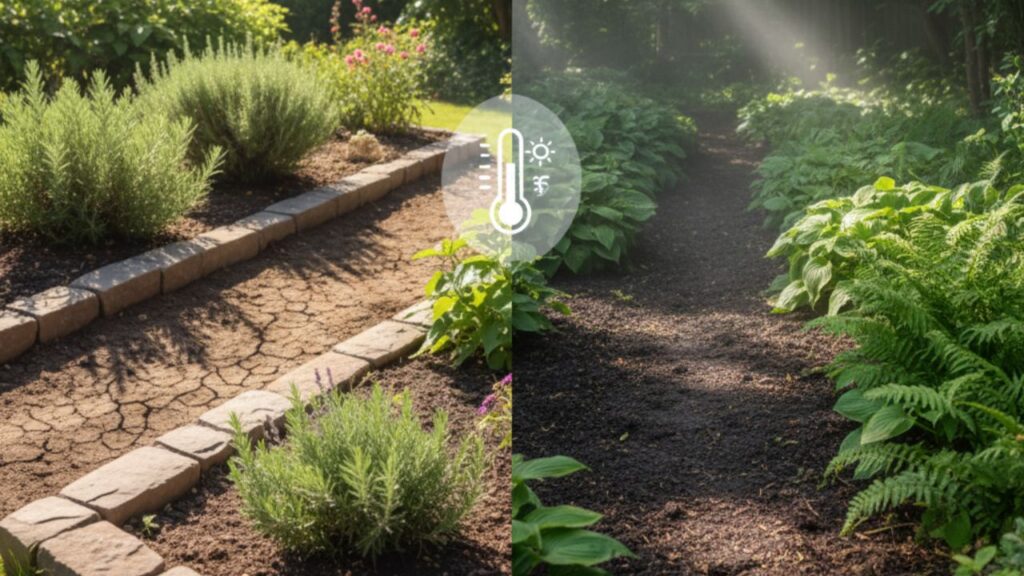
Advanced gardeners create artificial microclimates:
- Use stone edges to hold in heat.
- In northern gardens that are open, plant hedges to block the wind.
- Put rain gardens in low spots to stop erosion.
Hidden Fact:
In the 18th century, the Fulda monastery gardens used stone benches in smart ways. They weren’t for sitting on but to keep the herb beds warm.
SECRET 2—Master the Soil Language of Germany
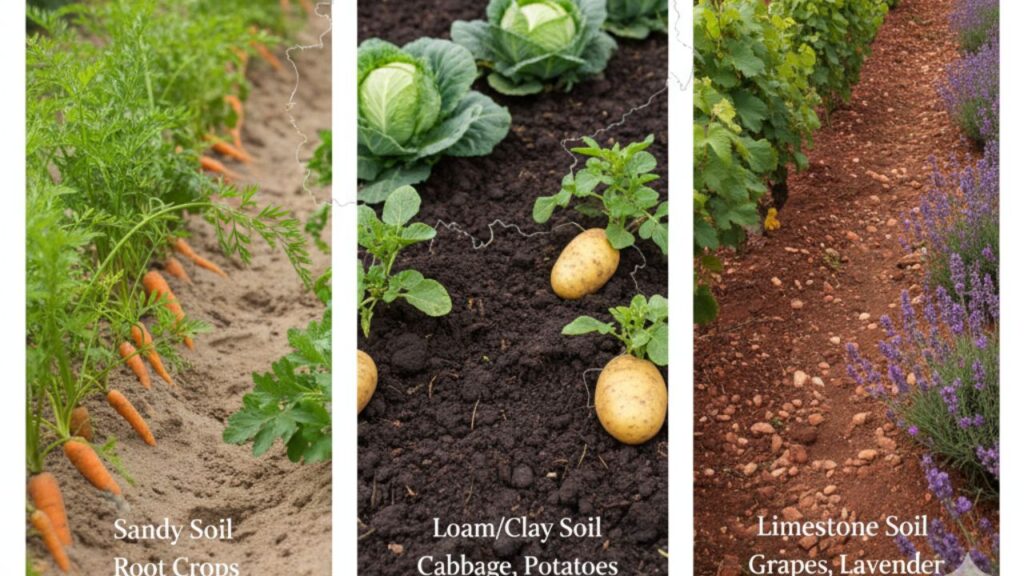
The soils in Germany are completely unique. For example, in Bavaria, they are made up of loess and clay, and in Brandenburg, they are made up of sandy mixes. If you know what kind of soil you have, you can avoid years of guesswork.
| Region | The dominant soil type | Ideal Crops |
| Brandenburg & Saxony | Sandy | Root crops, herbs, carrots |
| Bavaria & Baden-Württemberg | Loam/Clay | Cabbage, potatoes, berries |
| Rhine & Moselle Valleys | Limestone-rich | Grapes, lavender, tomatoes |
Beginner Gardener Guide:
- Do a jar test: mix soil and water in a jar and let it sit overnight to see how much sand, silt, and clay are in the mix.
- Add organic manure and compost once a season.
- Avoid excessive tilling; German soils thrive with minimal disturbance.
Expert Gardener Insight:
- Use green manure crops like clover between seasons.
- Change the pH to fit the needs of the area (lime for acidic Bavarian soils).
- Use worm tea or compost extracts to keep the balance of microbes.
Hidden Fact:
Old Saxon farms used crushed limestone from old walls as natural soil amendments. This is an early example of Germany’s environmentally friendly history.
SECRET 3—Follow the Phenological Calendar, Not the Wall Clock
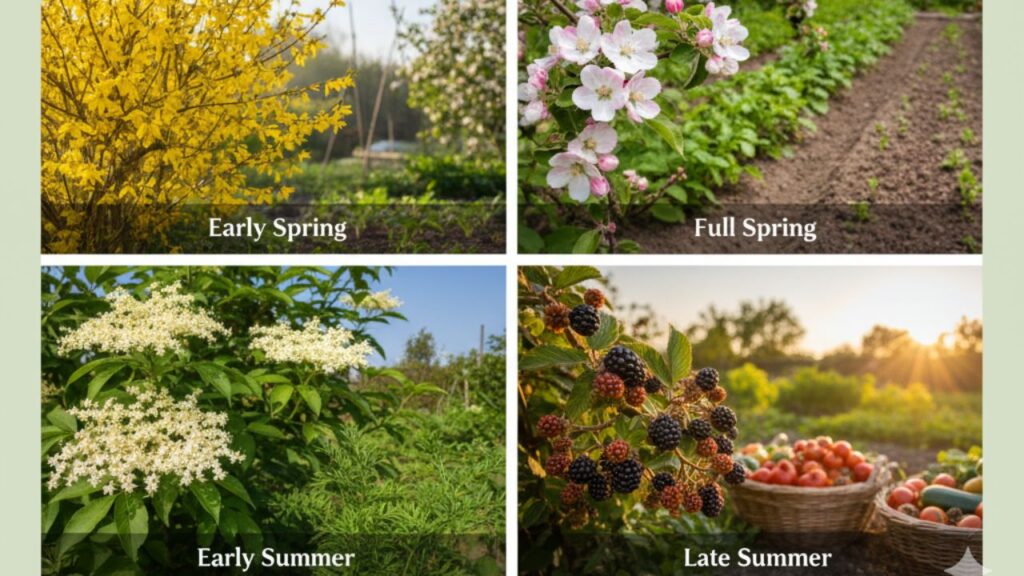
German gardeners don’t pay attention to standard planting dates; they pay attention to what nature tells them. The phänologischer Kalender is an outdated system that breaks the growing season into ten biological stages.
| Phenological Stage | Natural Signal | Gardening Action |
| Early Spring | Forsythia blooms | Sow early greens |
| Full Spring | Apple blossoms open | Plant potatoes |
| Early Summer | Elderflowers bloom | Seed carrots |
| Late Summer | Blackberries ripen | Harvest early crops |
Beginner Gardener Guide:
Learn how to “read the landscape.” Keep track of when flowers bloom and the weather in your area by starting a garden journal.
Don’t just trust planting dates you find online; the different regions of Germany can change the best times to plant by up to three weeks.
Expert Gardener Insight:
Combine climate logs with soil sensors to keep track of phenological data digitally. This is a mix of old and new.
Hidden Fact:
Some winemakers in southern Germany still prune their grapes by the first crocus bloom, a tradition that has been going on for hundreds of years.
SECRET 4—Water Wisely: The Art of German Irrigation
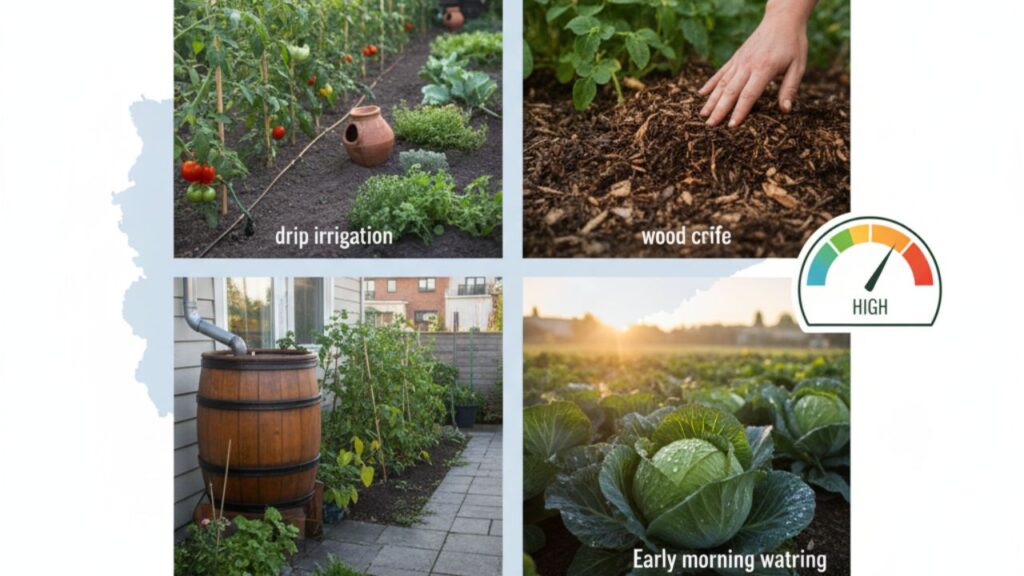
In German gardens, success is defined by how well you manage water because the rain is difficult to predict and the risk of drought is rising.
| Method | Efficiency Level | Best For |
| Drip Irrigation | 90% | Vegetable gardens |
| Clay Pot Irrigation (Olla) | 85% | Small herb patches |
| Rain Barrel Systems | 80% | Urban gardening |
| Sprinklers | 60% | Lawns only |
Beginner Gardener Guide:
- Use mulch, like straw or wood chips, to keep moisture in.
- Water in the early morning or late evening.
- Put in rain barrels; many German cities will help pay for them.
Expert Gardener Insight:
- Make use of intelligent irrigation timers connected to local rainfall data.
- Gather greywater for flower beds (not for eating).
- Make swales (shallow trenches) to catch rainwater on slopes.
Hidden Fact:
Germany’s allotment gardens, or “Kleingärten,” were the first to have laws about collecting rainwater in the 1930s. Now, this is standard in all of Europe.
SECRET 5—Choose Plants that Speak the German Climate Language
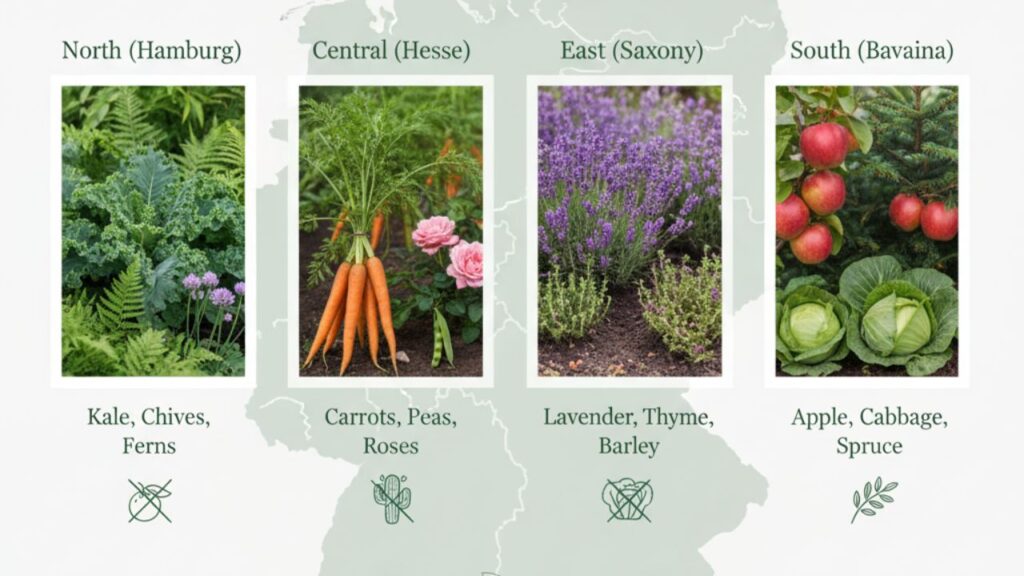
The best gardens know how to work with their surroundings. Here are the plants that thrive in this area:
| Region | Resilient Plants | Not Recommended |
| North (Hamburg) | Kale, chives, ferns | Citrus, rosemary |
| Central (Hesse) | Carrots, peas, roses | Cactus species |
| East (Saxony) | Lavender, thyme, barley | Lettuce in summer |
| South (Bavaria) | Apple, cabbage, spruce | Olive, fig |
Beginner Gardener Guide:
Begin with species that are native or have been naturalized. They need less water and can fight off local pests.
Visit local nurseries (Gärtnerei) to see what really grows in your area.
Expert Gardener Insight:
Use companion planting maps that are made for German soils. For example, plant leeks and carrots together to keep root flies away.
Use the rotation method (Fruchtfolge), which is a key part of traditional German farming.
Hidden Fact:
Over 600 medicinal plants were listed in medieval German monasteries. This is where Europe’s herbal gardening tradition began.
SECRET 6—Frost: The Invisible Enemy (and How to Outsmart It)
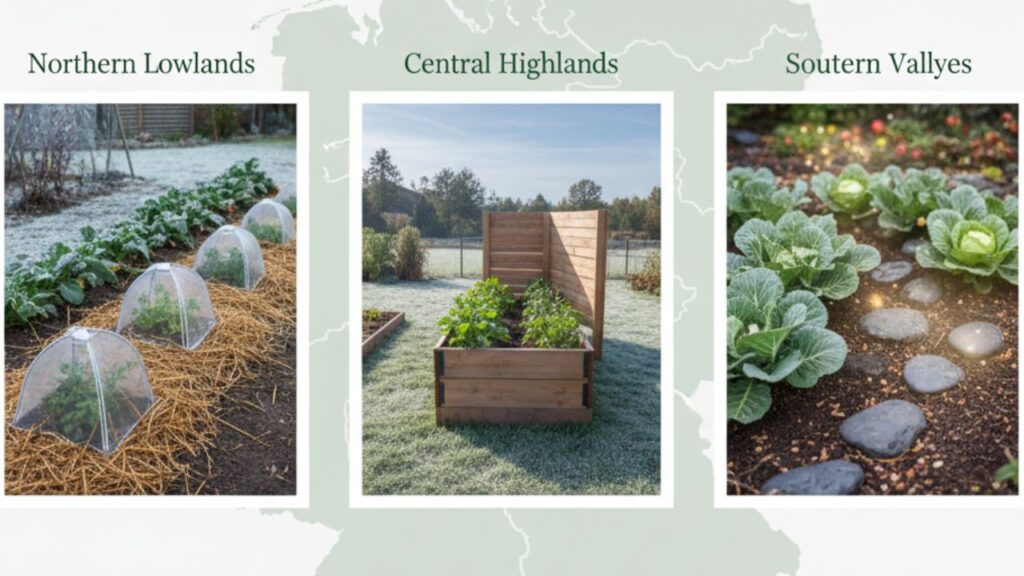
Frost is Germany’s quiet killer, especially in the areas between Thuringia and Bavaria.
| Frost Zone | Typical Frost Months | Protection Strategy |
| Northern Lowlands | Nov–Mar | Cloches, mulch layers |
| Central Highlands | Oct–Apr | Raised beds, windbreaks |
| Southern Valleys | Dec–Feb | Heat-retaining stones |
Beginner Gardener Guide:
- Utilize applications such as DWD WetterRadar to monitor forecasts.
- At night, cover plants that are sensitive.
- Wait to plant until the soil is warmer than 10°C.
Expert Gardener Insight:
- Use bricks or water barrels to make thermal mass.
- Use old glass to make cold frames.
- Choose frost-resistant varieties, like the ‘Filderkraut’ cabbage.
Hidden Fact:
The first passive heating system in the world was used by Bavarian monks to move warm air from kitchens to greenhouses through underground tunnels.
SECRET 7—Think Like a German Gardener: Order, Precision, Patience
German gardens are more than just places to relax; they are ways of thinking about discipline and renewal.
Beginner Gardener Guide:
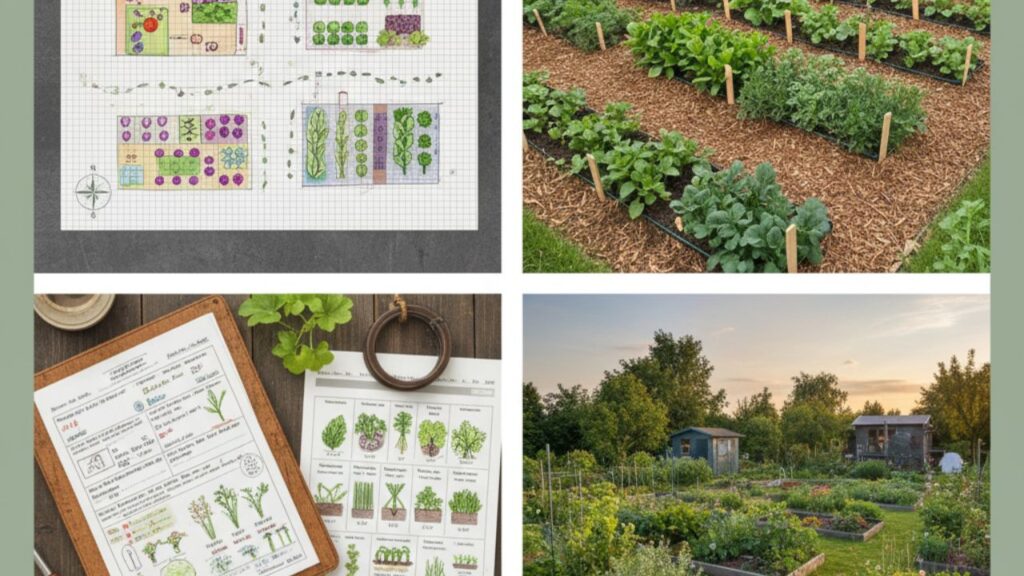
- Before you plant, make a plan for where to put the plants. You can use graph paper or digital maps.
- Put plants into groups based on how much water and sunlight they need.
- Make a chart for each season.
Expert Gardener Insight:
- Consider applying the “Kulturpflege” method: maintain things effectively, but avoid overmanagement.
- Let natural biodiversity happen; beneficial weeds can help keep soil ecosystems healthy.
- Keep track of yields, pest activity, and soil conditions so you can keep getting better.
Hidden Fact:
The “Schrebergarten” culture that started in Leipzig (1864) wasn’t about having fun; it was meant to teach city families how to grow food when times were tough.
Global Comparison: Germany vs. Other European Gardening Climates
| Country | Climate Type | Gardening Focus | Challenge |
| Germany | Temperate-Continental | Regional adaptation | Frost & rainfall variability |
| France | Mediterranean | Early harvest cycles | Summer drought |
| UK | Maritime | Year-round greens | Slugs & humidity |
| Italy | Mediterranean | Long growing season | Water scarcity |
Insight:
Germany has the widest range of crops in Europe because it has a balance of maritime moisture and continental chill. Its climate makes it a great place for adaptive gardeners.
Climate Change Outlook: The New German Garden
According to the German Meteorological Service (DWD), long-term shifts in rainfall and temperature patterns are redefining how plants respond to seasonal cues. This data-backed insight is crucial for anyone mastering gardening in German climate regions, as it helps gardeners anticipate frost periods, drought intensity, and the timing of phenological events like flowering or harvest readiness. Exploring DWD’s regional reports can give gardeners scientific clarity, ensuring that every planting decision aligns with Germany’s evolving climate reality.
Germany’s average temperature has gone up 1.6°C since 1881, which has changed the growing zones. Expect:
- Longer autumns mean longer harvests.
- Drier summers mean crops that can handle drought, like sage and lavender.
- Early springs mean that flowers that bloom too soon are at risk of frost.
Pro Note:
To stay ahead of nature’s new rules, German gardeners of the future will need to combine old methods like mulching, rotation, and microclimate design with new ones like smart sensors and AI forecasting.
FAQs About Gardening in German Climate Regions
Q1: What is the best planting month for Gardening in German Climate Regions?
Q2: Is container gardening beneficial for cities in German Climate Regions?
Q3: Which German region is best for fruit gardening?
Q4: What can I do to keep plants safe during the winter in German climate areas?
Final Notes: The Garden as a Reflection of the Gardener
Gardening in German climate regions is both art and science—a test of observation, timing, and adaptation. The soil teaches patience; the frost demands respect; the sun rewards diligence.
Beginners learn by doing; experts learn by listening to the garden itself.
Remember: in Germany, every region holds its own secret—and every gardener is empowered to uncover it.
Sermad bhai apne to kamal krdia, mene issi german gardening tips se apne ghr me garden bnaya or wo boht acha grow kr rha he, Thank you bhai!!
W88is… hmmm, sounds familiar. I think I saw some ads for them. Is it just me, or does anyone else find their website kinda confusing? Anyway, take a peek yourself! w88is.
Wonderful items from you, man. I have take note your stuff prior to and you are simply too fantastic. I really like what you’ve acquired right here, really like what you are stating and the way wherein you say it. You’re making it entertaining and you continue to care for to keep it sensible. I cant wait to learn far more from you. That is really a great website.
Alright, checking out 88clb8gq com at baccarat88clb.com. Fingers crossed for some wins, people! Come check it out as well! 88clb8gq com
Heard about Mana Club. Let’s explore and unravel! Who wants to know what’s hidden inside Mana Club like I do: mana club
Fortune Gems 2 at Jililiveph.Net? Oh yeah, I know that one! A fun and relaxing game with a good return margin. Try your luck on fortune gems 2
Pingback: hello world
Pingback: levothyroxine tablets
Colorplay is really colorful and fun to play. They have many many games and easy ways to deposit or withdraw money. Here is a direct link colorplay
Pakgamelogin, comin’ through! Hope the games are fire! Check it out and let me know what you think at pakgamelogin.
Alright, checking out swertre99! Heard some buzz about it. Hope it’s got some good action. Will report back if I hit a big win! swertre99
Pingback: finasteride tablet
Very interesting points you have remarked, thankyou for posting.
Winbet88casino’s got a nice array of games to choose from. Something for everyone, really. It’s worth checking to see if you are a winner. Visit it yourself: winbet88casino
I’m finding myself returning to gg99game more and more. They are fun and interactive. I see why my buddies say good things about it. Play here: gg99game
Hey, checked out casinoplusapps the other day. Pretty slick site, mate! Found some cool new slots I hadn’t seen before. Worth a look-see if you’re after a fresh online casino experience. Cheers! casinoplusapps
I am not real excellent with English but I get hold this real easygoing to read .
Pingback: cost zithromax
Pingback: generic for viagra
Pingback: linezolid 600mg tab
hi!,I like your writing so much! share we communicate more about your article on AOL? I require a specialist on this area to solve my problem. Maybe that’s you! Looking forward to see you.
Pingback: lopressor metoprolol
Pingback: vibramycin eye ointment
Pingback: esomeprazole 20mg
Pingback: vidalista 40 mg
Pingback: cenforce 50 kopen
Pingback: stendra ed
I’ve tried a lot of platforms but this one feels different. The community is great and the promotions are actually fair. I’m sticking with idjarot88 from now on.
Downloaded the mx1xbetapp last week and I’m already hooked! Super convenient to place bets on the go. The interface is smooth, and the odds are pretty competitive. mx1xbetapp
mxsolcasino is pretty slick. The site design is modern and the games load quickly. I’ve enjoyed exploring their different game categories. mxsolcasino
Thanks for sharing excellent informations. Your web site is so cool. I’m impressed by the details that you’ve on this website. It reveals how nicely you understand this subject. Bookmarked this website page, will come back for more articles. You, my pal, ROCK! I found just the info I already searched all over the place and simply couldn’t come across. What a perfect site.
At this time it sounds like WordPress is the best blogging platform available right now. (from what I’ve read) Is that what you’re using on your blog?
Loving the info on this site, you have done outstanding job on the posts.